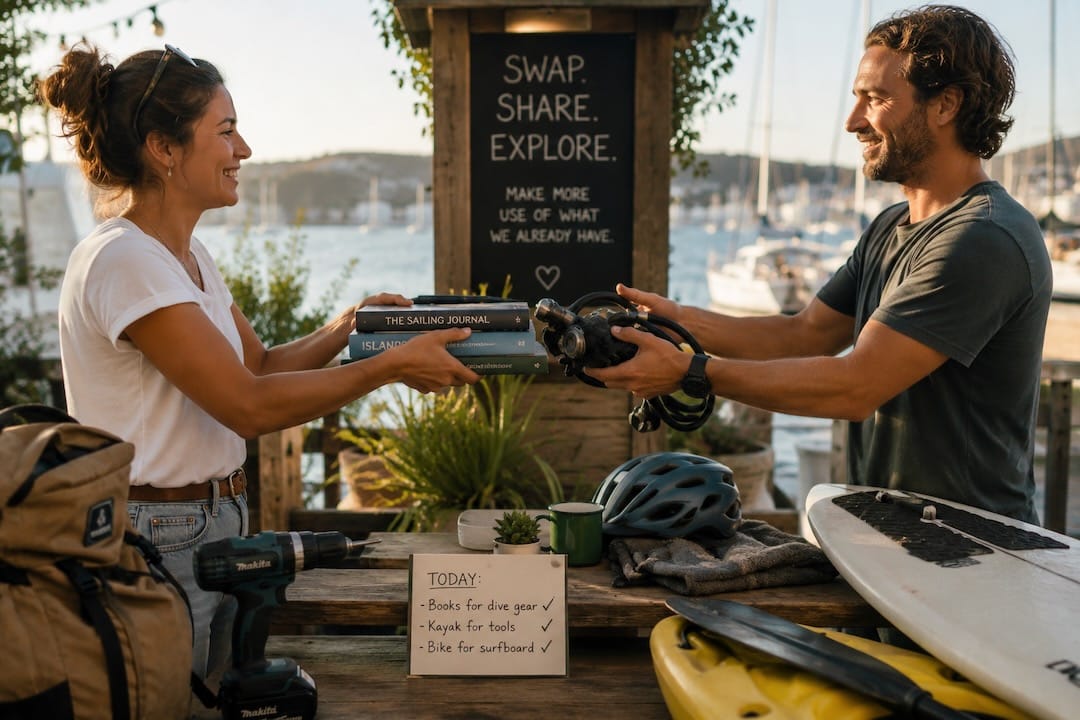
Why Swapping Is More Popular Than Ever
For most of human history, swapping was a normal part of every day life.
Before online marketplaces, people exchanged skills, goods, accommodation, equipment, and favours within their communities. You helped me build a fence. I helped you harvest a crop. You lent me a horse. I lent you a wagon.
The modern economy gradually replaced much of that with cash transactions. Need something? Buy it. Need to hammer a nail? buy a hammer. Need transport? Buy a car. And eventually ownership became the default answer to almost everything.
But over the few decades something interesting has happened. We’re slowly rediscovering swapping. Not because it’s new. Because it’s old.
In many ways, swapping is one of humanity’s oldest economic systems. The internet didn’t invent it. Technology simply made it possible to do something that was once limited to neighbours, friends, and local communities on a much larger scale.
The Rise of Access Over Ownership
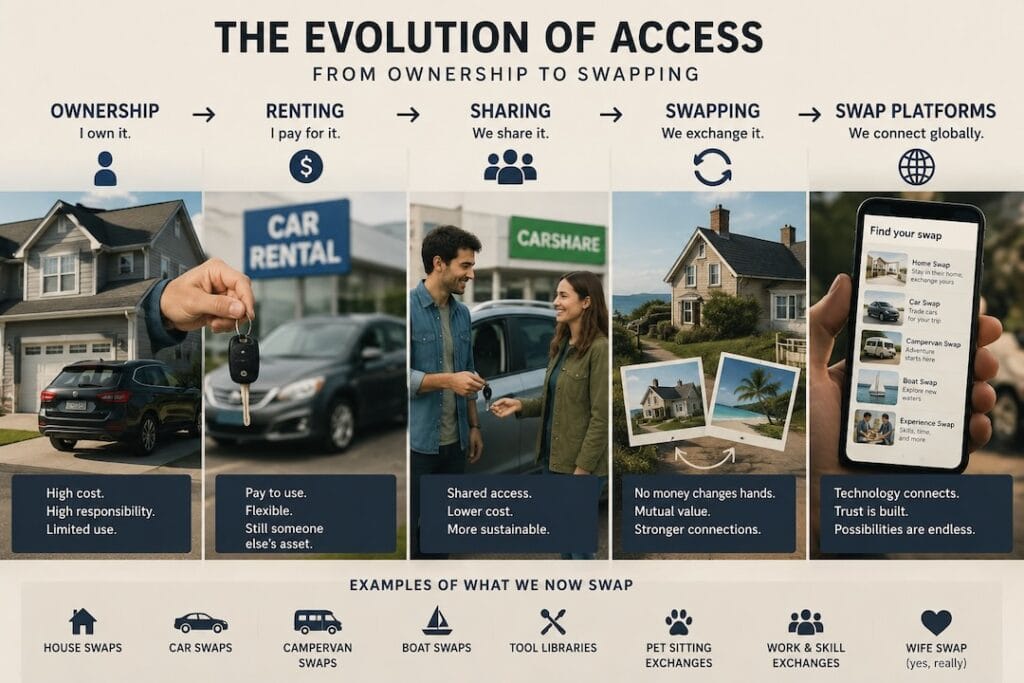
Originally, the shift mostly expressed itself through rentals and subscriptions. We stream movies instead of buying DVDs. We rent or lease vehicles instead of owning them. We subscribed to software instead of purchasing it outright.
But over time the idea evolved further. People didn’t just want access to products. They wanted better ways to utilize assets they already owned. That has given rise to an entirely new generation of platforms built around sharing and exchange. House swapping. Home sharing. Car sharing. Tool libraries. Pet sitting exchanges.
The underlying idea was remarkably simple: If two people already possess something the other person values, perhaps money doesn’t need to sit at the centre of every transaction. In many cases both parties can end up better off simply by exchanging access. That’s a surprisingly powerful idea.
Because unlike traditional rentals, swapping often creates value without requiring new assets to be built, manufactured, or purchased. It simply unlocks value that already exists.
And as technology made it easier to find compatible people, communicate, establish trust, and coordinate arrangements, swapping started moving from something people did informally with friends to something that could happen between complete strangers.
We Have More Stuff Than Ever
There’s another force driving the growth of swapping that rarely gets discussed.
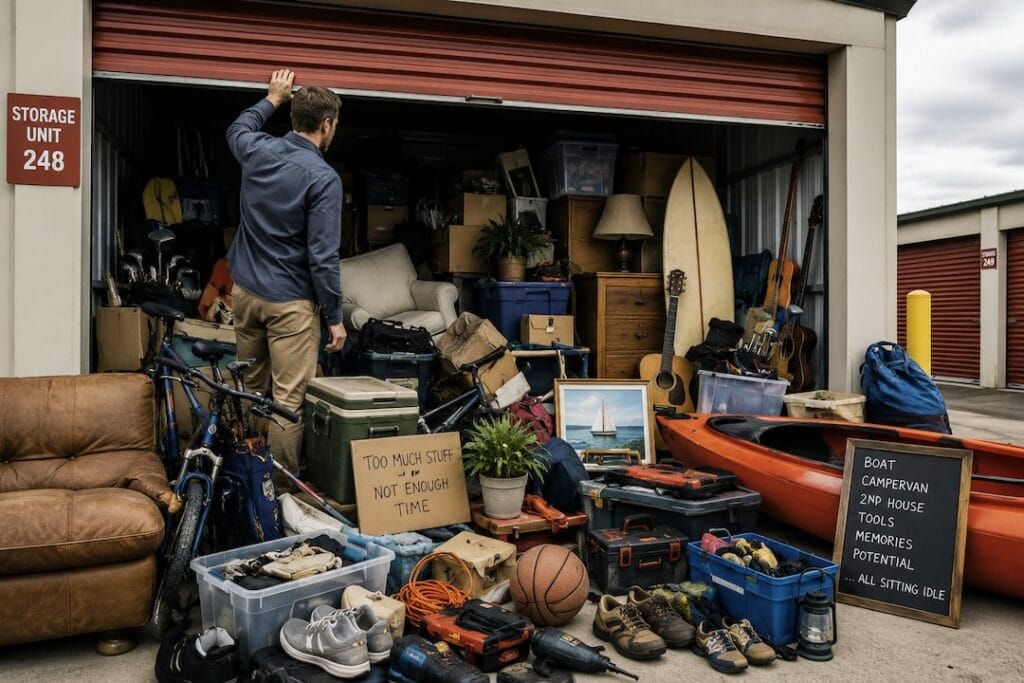
We simply have more stuff than ever before. More houses. More holiday homes. More boats. More campervans. More tools. More storage units. More garages full of things we rarely use.
Walk through almost any marina and you’ll see boats that move only a few weeks a year. Drive through many holiday towns and you’ll find houses sitting empty for much of the year.
Look at the self-storage industry and you’ll find one of the fastest-growing sectors in many countries — entire businesses built around storing possessions people don’t currently have room for or use regularly.
In many ways, modern society has become incredibly efficient at distributing assets optimally. And less efficient at using them.
The result is a staggering amount of unused capacity. Spare bedrooms. Empty holiday homes. Giant trucks patrolling suburbia. Campervans permantly parked in driveways. Boats wasting away in dry dock.
The sharing economy didn’t create that excess capacity. It simply found ways to unlock it. Airbnb didn’t build millions of guest rooms. Those rooms already existed. Ride sharing didn’t create millions of empty car seats. Those seats were already there. Home exchange networks didn’t create holiday homes. The homes were already sitting vacant. The technology simply made it easier for people to find one another.
Swapping follows the same logic. It’s not really about consuming more. In many ways it’s about consuming less. Making better use of things that already exist. Getting more experiences from assets that are already sitting idle. The modern sharing economy isn’t solving a shortage problem. It’s solving an abundance problem.
And in an era where costs continue to rise while resources become increasingly constrained, that’s an idea that resonates with more people every year.
Technology Solved the Trust Problem

Historically, swapping was limited by geography. You could only exchange things with people you already knew.
The internet changed that. Suddenly complete strangers could communicate easily, build reputations, verify identities, share reviews, exchange photos, and establish trust before ever meeting.
That single shift unlocked entirely new categories of exchange.
Airbnb, ridesharing, house swapping, peer-to-peer rentals, coworking spaces, pet sitting networks, and countless other platforms emerged from the same underlying idea:
Millions of underutilized assets already existed. The challenge was connecting people. Technology solved that problem.
Experiences Are Replacing Possessions

For much of the twentieth century, success was often measured by what people owned.
A bigger house. A newer car. A holiday home. A boat. More possessions generally meant more status.
Increasingly, that seems to be changing. Many people now place a greater value on experiences than accumulation. Travel. Adventure. Flexibility. Freedom. Time.
A growing number of people would rather spend a summer exploring somewhere new than spend years paying to own another asset they rarely use. They would rather access something occasionally than maintain it year-round.
That doesn’t mean ownership is disappearing. Far from it. But it does mean more people are becoming comfortable with the idea that ownership and access don’t always need to be the same thing.
Swapping fits naturally into that mindset. The goal isn’t necessarily owning more.
It’s experiencing more.
Rising Costs Are Accelerating the Trend
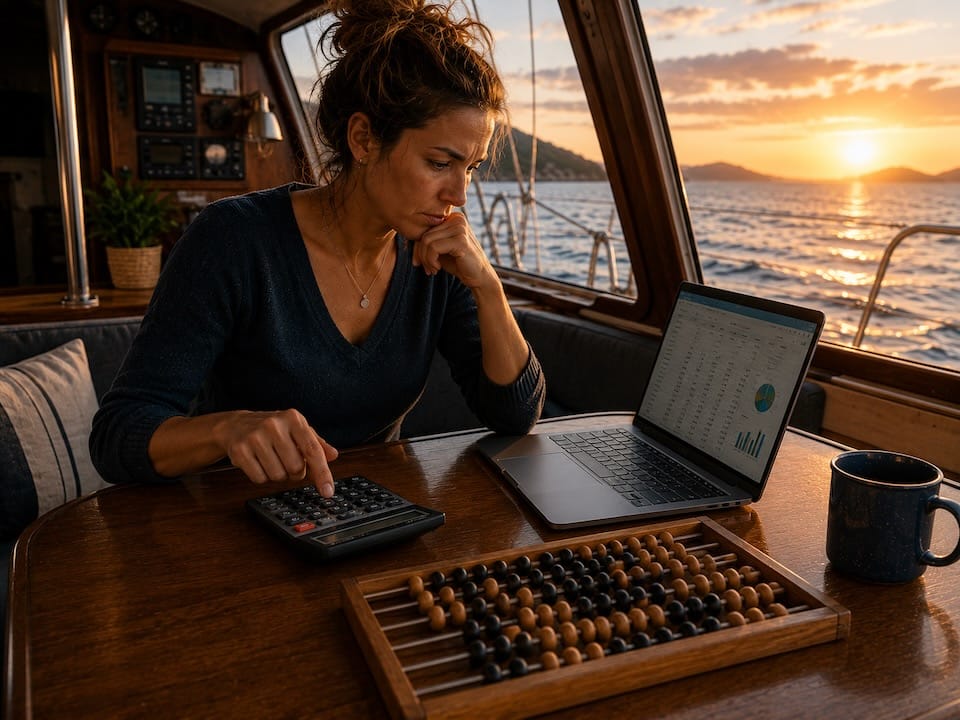
The economics matter too. Housing is expensive. Travel is expensive. Vehicles are expensive. Boating is (very) expensive. Almost every major hobby and lifestyle category seems to have become significantly more expensive over the last decade.
At the same time, wages haven’t always kept pace.
The result is that many people are looking for ways to enjoy the things they love without bearing the full cost of ownership every single time.
Swapping allows people to unlock value from assets they already have while accessing experiences they otherwise couldn’t justify financially.
For many people, that’s becoming less of a novelty and more of a necessity.
We’re More Mobile Than Ever

Remote work, digital nomadism, flexible retirement, and international lifestyles have created a generation of people who spend more time moving between places than previous generations ever did.
People increasingly split their lives across multiple locations. They spend summers in one country and winters in another. They work remotely from the road. They travel for months rather than weeks. That mobility naturally creates opportunities for exchange.
Someone has a house they aren’t using. Someone else has a campervan sitting idle. Another person has a boat tied to a dock for most of the year.
Increasingly, people are asking the same question: What if these assets worked harder? What if more people could benefit from things that are already sitting unused? What if access could become more important than ownership?
What Does This Mean For Boating?
This is where boat swapping enters the conversation.
Not because boating is identical to houses, campervans, or holiday homes.
It isn’t.
Boats are more complicated. More valuable. More mobile. And often far riskier.
But the same forces that helped popularize swapping elsewhere are now beginning to appear in the boating world too. Rising costs. Unused assets. Better communication. More flexible lifestyles. And a growing willingness to question whether ownership and access have to be the same thing.
Walk through almost any marina and you’ll see it. Thousands of capable boats sitting quietly at their berths. Many used only a few weeks each year. Many others not at all.
The boating world doesn’t have a shortage of boats. It has a shortage of access. Boat swapping may never become mainstream.
Or it might become one more example of a broader trend that’s already reshaping how people travel, work, and experience the world.
Either way, the question feels more relevant than ever.
Not because boats have changed. Because everything around them has.