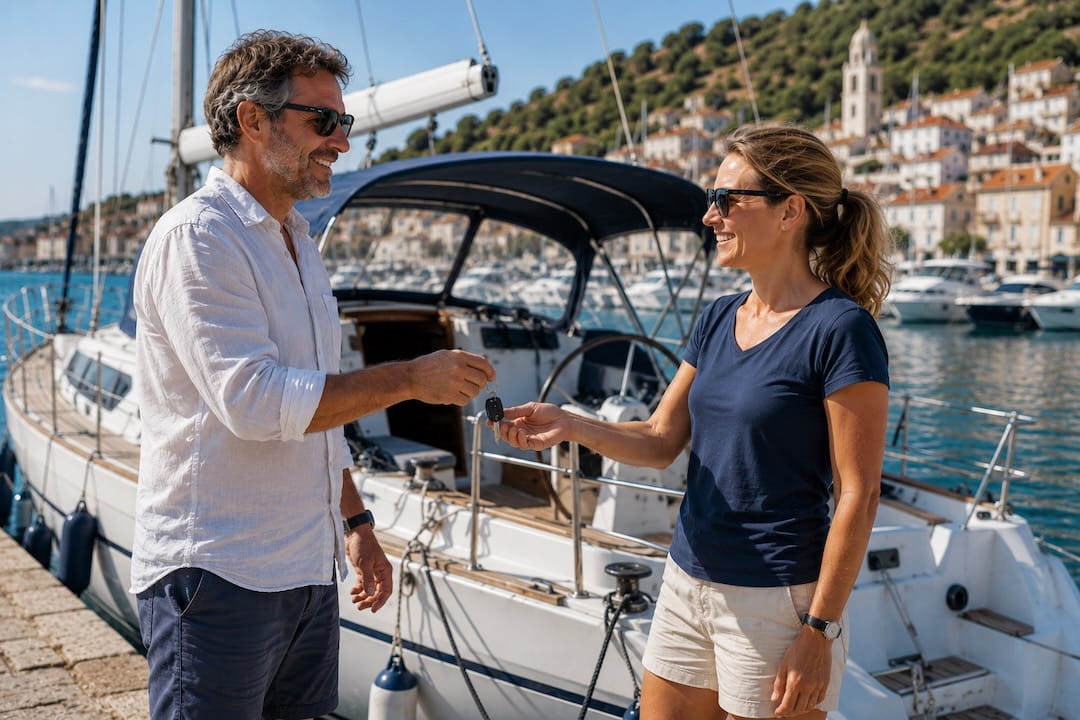
10 Tips for a Successful Boat Swap
A successful boat swap rarely happens by accident.
Most of the horror stories people imagine when they hear about boat swapping—damaged boats, unreliable guests, insurance nightmares, or last-minute cancellations—usually have one thing in common: poor planning.
The good news is that most of these risks can be managed. Thousands of boat owners lend their boats to friends, family, sailing club members, delivery skippers, and charter guests every year.
A boat swap isn’t fundamentally different. The key is to take sensible precautions, communicate clearly, and find the right match.
These are 10 essential tips for a Successful Boat Swap
1. Choose the Right People, Not Just the Right Boat
It’s tempting to focus on the boat.
A beautiful catamaran in the Caribbean or a well-equipped cruiser in Greece can be hard to resist. Most sailors naturally start by looking at destinations, layouts, and equipment lists. However, the most important factor in any swap isn’t the vessel—it’s the people behind it.
Spend time getting to know the owner. Arrange a video call rather than relying solely on messages. Talk about your sailing background, cruising style, expectations, and concerns. Ask about their experience aboard the boat and what they enjoy most about the area they sail.
If conversations feel awkward, rushed, or evasive, pay attention to that feeling.
Trust is one of the most valuable currencies in any swap. The best exchanges often happen between owners who have developed a genuine level of confidence in one another before the boats are ever handed over. In many cases, owners finish a successful swap having made friends they stay in touch with for years afterward.
2. Be Honest About Your Experience

One of the quickest ways to destroy trust is to oversell your abilities.
If you’ve never docked a catamaran, don’t pretend you have. If you’re uncomfortable sailing overnight, say so. If you’ve only sailed in sheltered waters or light winds, be upfront about it.
Most owners are surprisingly accommodating when they know the truth. In fact, many would rather swap with a cautious sailor who knows their limits than a highly experienced sailor who takes unnecessary risks.
What worries people isn’t inexperience—it’s dishonesty.
Being realistic about your skills allows both parties to decide whether the swap is a good fit. It also creates an opportunity to discuss limitations and expectations before they become problems.
Remember that every skipper started somewhere. The goal isn’t to impress the other owner. The goal is to create a safe and enjoyable experience for everyone involved.
3. Start Small
If you’re nervous about boat swapping, don’t begin with a three-month exchange halfway around the world.
Consider a shorter swap first.
A weekend, a week, or a swap between nearby cruising grounds can be a great way to build confidence and learn what works. Even experienced sailors often discover practical lessons during their first exchange that make future swaps run more smoothly.
Starting small also reduces pressure. Both owners can test the process, refine their communication, and gain experience without committing to a major adventure.
Many successful long-term swaps started with a relatively modest first exchange. Like most things in sailing, confidence grows with experience.
There’s no prize for going all-in on your first attempt.
4. Exchange Plenty of Information
Good communication solves most problems before they happen.
Share photos, maintenance records, manuals, equipment lists, and details about how the boat operates. The more information you exchange, the fewer surprises there will be once the swap begins.
Explain any quirks.
Maybe the engine needs a little throttle to start. Perhaps the freshwater gauge is inaccurate. Maybe the anchor windlass only works from the cockpit switch. Maybe the fridge breaker occasionally trips if too many appliances are running at once.
These details might seem obvious to you because you’ve lived with them for years, but they can be incredibly helpful to someone stepping aboard for the first time.
Remember, nobody knows your boat like you do. Taking the time to pass on that knowledge is one of the easiest ways to set the other skipper up for success.
5. Create a Boat Handbook

A simple document can dramatically improve the swap experience.
Many owners assume they’ll remember everything during a handover conversation, only to realize later that they’ve forgotten half the important details.
A written handbook removes that problem.
Include information such as:
- Engine starting procedures
- Electrical system overview
- Water and fuel capacities
- Anchor setup
- Emergency contacts
- Marina recommendations
- Local sailing hazards
- Equipment locations
- Waste disposal procedures
- Spare parts inventory
- Local regulations
It doesn’t need to be complicated.
Even a few pages of notes can make a visiting skipper feel far more comfortable aboard. If you’re willing to invest a little more time, adding photos or diagrams can make the document even more useful.
A good handbook often becomes one of the most appreciated parts of the entire swap.
6. Understand the Insurance Position
Insurance is one of the biggest concerns boat owners have, and for good reason.
Before agreeing to a swap, contact your insurer and discuss the arrangement. Some insurers allow additional named skippers. Others may require specific qualifications, experience levels, or prior approval before cover remains valid.
Don’t assume you’re covered.
Get the Insurance Conversation Toolkit
Clarify the situation early so there are no surprises later.
It’s also worth discussing liability and deductibles with the other owner. If a minor incident occurs, how will costs be handled? What happens if weather delays travel plans or forces a change in itinerary?
These conversations aren’t always exciting, but they are important.
The best time to discuss difficult scenarios is before anything has gone wrong.
7. Agree on Expectations in Writing
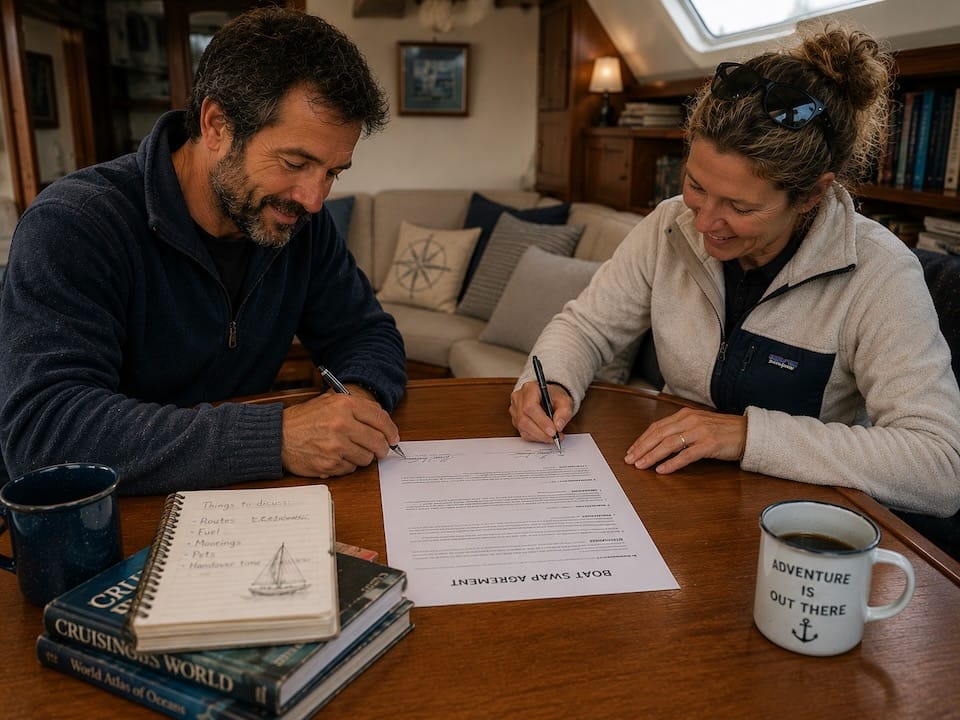
Trust and goodwill are wonderful, but clear expectations are even better.
Discuss topics such as:
- Cleaning standards
- Fuel replacement
- Marina fees
- Damage reporting
- Maintenance responsibilities
- Cancellation procedures
- Geographic cruising limits
- Use of tenders and toys
- Guest policies
You don’t need a fifty-page legal contract.
A simple written agreement confirming what both parties expect can prevent misunderstandings and give everyone confidence.
Most disagreements don’t arise because somebody is acting maliciously. They arise because two reasonable people made different assumptions. A short written agreement helps ensure everyone is working from the same set of expectations.
8. Leave the Boat Better Than You Found It
This is perhaps the most important rule of all.
Treat the boat as though it belongs to a close friend.
Replace anything you use. Report any issues immediately. Fix small problems where appropriate. Thoroughly clean the boat before handing it back.
If you notice a loose screw, tighten it. If a line is badly chafed, mention it. If something breaks accidentally, be upfront about it.
Nothing destroys trust faster than discovering a problem that somebody hoped would go unnoticed.
The goal should be for the owner to return and feel that their boat was respected and cared for. In an ideal world, they come back to a boat that is cleaner, tidier, and better organized than when they left.
The best swaps often end with both owners feeling they received more value than they gave.
9. Keep Communication Open During the Swap

Don’t disappear once the keys change hands.
A quick message every few days can provide enormous peace of mind.
Share a photo from a beautiful anchorage. Send a picture of a sunset. Ask a question if something doesn’t seem right. Let the owner know how things are going.
Most boat owners genuinely enjoy seeing their boat being used and appreciated. For many, one of the hardest parts of a swap is simply not knowing what is happening aboard their boat.
Regular communication helps remove that uncertainty.
It also makes practical problem-solving much easier. If an issue arises, the owner may be able to provide a quick solution based on years of experience with the vessel.
Good communication builds trust and often leads to future swap opportunities.
10. Focus on the Experience
It’s easy to obsess over the risks.
After all, sailors are trained to think about worst-case scenarios. We plan for storms, equipment failures, and unexpected problems because that’s part of responsible seamanship.
But it’s worth remembering why people consider boat swaps in the first place.
Boat ownership is expensive. Many boats spend months sitting unused. Meanwhile, owners dream of exploring new cruising grounds around the world.
A successful swap can unlock experiences that would otherwise be difficult or prohibitively expensive.
You might spend a month cruising the Greek Islands, explore the San Juan Islands, discover Croatia’s coastline, sail the Whitsundays, or enjoy a season in the Caribbean—all while another owner enjoys your home waters.
You gain local knowledge, a fully equipped cruising boat, and an authentic experience that is difficult to replicate through traditional chartering.
That’s a powerful opportunity.
Final Thoughts

Boat swaps aren’t for everyone.
Some owners will never feel comfortable handing over the keys, and that’s perfectly reasonable. Boats are deeply personal possessions. They represent years of work, maintenance, memories, and dreams.
But for sailors willing to do their homework, communicate openly, and approach the process thoughtfully, boat swapping can be one of the most rewarding ways to explore new destinations.
The secret isn’t eliminating risk completely.
That’s impossible in sailing, and it’s impossible in boat swapping.
Instead, successful swappers focus on managing risk sensibly, choosing the right people, and creating systems that make the experience enjoyable for everyone involved.
Do that, and you’ll discover what many boat owners are already learning: that a carefully planned swap can unlock adventures that would otherwise remain firmly on the bucket list.