Boat Swapping vs Chartering: 7 Reasons It’s Better (and 7 Reasons It’s Not)
If you’ve ever dreamed of sailing somewhere new, you’ve probably looked at chartering.
It’s the traditional solution. Pick a destination, pay a charter company, turn up, and sail away.
But there’s another option that’s growing in popularity: boat swapping.
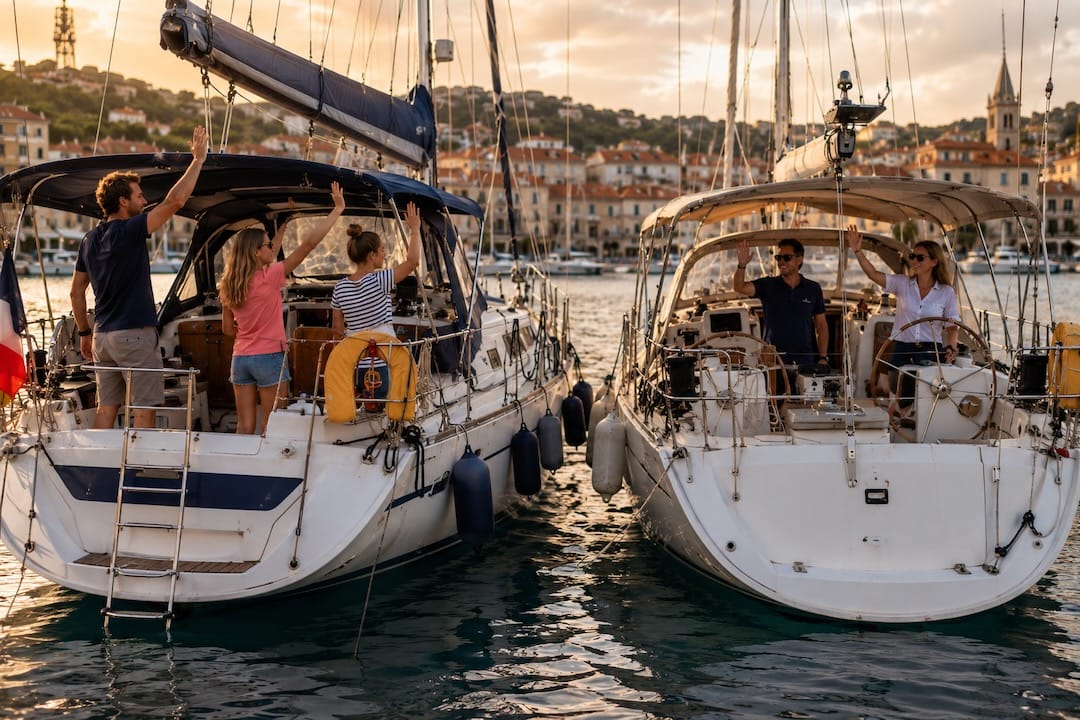
Instead of renting a boat from a charter company, you arrange an exchange with another boat owner. They use your boat (home, home caravan or other asset etc), and you use theirs.
It can open up destinations that would otherwise be out of reach, but it’s not perfect for everyone.
Here are seven reasons boat swapping can be better than chartering—and seven reasons why it might not be.
Why Boat Swapping Is Better Than Chartering
It Can Save You Money

The biggest advantage is obvious.
A week’s charter on a well-equipped cruising yacht can easily cost thousands of dollars before you’ve paid for flights, marina fees, fuel, or provisioning.
With a boat swap, the accommodation and boat itself are already covered by the exchange.
You’ll still have expenses, but the largest cost is often removed entirely.
For many sailors, boat swapping makes destinations financially possible that chartering simply doesn’t.
You Can Sail Beyond the Usual Charter Destinations

Most charter fleets are concentrated in a relatively small number of popular cruising grounds—places like the the Greek Islands, Croatia, the British Virgin Islands, the Whitsundays, and other well-established destinations.
There’s nothing wrong with these places. They’re popular for good reason.
But the world is full of incredible sailing destinations that have little or no charter industry at all. Remote parts of Scandinavia, the Pacific Northwest, South Africa, New Zealand, Alaska, Patagonia, the Baltic, and countless smaller cruising regions are difficult or expensive to access through traditional charter companies.
Boat swapping opens the door to these places because you’re exchanging boats with local owners rather than relying on commercial charter fleets.
Instead of choosing from where charter companies operate, you can potentially sail almost anywhere boat owners are willing to swap.
For adventurous sailors, this can be one of the biggest advantages of all.
You Get Access to More Unique, Better Equipped Boats
Most charter fleets are built around popular production boats.
They’re practical, but they’re often very similar.
Boat swaps can give you access to a much wider range of vessels: classic yachts, liveaboard cruisers, expedition boats, catamarans, performance yachts, and owner-customized boats that would never appear in a charter fleet.
Moreover Owner boats are typically equipped for real live aboard life.
They often have better kitchens, more personal touches, upgraded navigation equipment, comfortable bedding, tools, spare parts, and practical modifications that make life aboard easier.
They’re designed to be lived on, not simply rented out 7 days at a time.
Every swap can feel different.
You Experience Places Like a Local

Boat owners know their home waters.
They know the quiet anchorages, the best tavernas, the fuel dock that doesn’t overcharge, and the marina manager who’s happy to squeeze you in when the harbour is full.
Many swaps include local knowledge, recommendations, and insider tips that can transform a trip.
It Encourages Longer Adventures
Because the cost isn’t tied to a weekly charter rate, boat swapping often makes longer trips more realistic.
Instead of trying to cram everything into seven days, you can slow down, spend more time in each destination, wait for better weather windows, and travel at a pace that feels far more like cruising than holiday-making.
This can be particularly appealing to liveaboards and long-term sailors. Rather than relocating their own boat across oceans or paying for multiple charter weeks, boat owners can swap one cruising ground for another. A sailor based in Greece might spend a month exploring New Zealand, Scotland, or the Pacific Northwest, while another owner enjoys their home waters in return.
For many cruisers, boat swapping isn’t just about saving money—it’s about unlocking the kind of slow, immersive adventures that are difficult to achieve within the time and budget constraints of traditional chartering. The longer the trip, the more attractive boat swapping can become.
It Creates Connections
Chartering is usually a transaction.
Boat swapping is a relationship.
Many swaps involve conversations before and after the exchange, sharing local knowledge, helping each other plan routes, and sometimes developing friendships that continue long after the trip ends.
For some sailors, this community aspect becomes one of the biggest benefits.
It Makes Better Use of Boats That Would Otherwise Sit Idle
Most private boats spend a large part of the year unused.
Boat swapping allows owners to enjoy new cruising grounds without purchasing another vessel or paying charter rates while making better use of an asset they already own.
It’s a more efficient way to travel.
Why Boat Swapping Is Not Better Than Chartering

It Requires More Trust
A charter company has contracts, deposits, maintenance teams, and established procedures.
Boat swapping relies on trust between owners. Not everyone feels comfortable with that.
Even with agreements, references, and careful planning, some sailors prefer the straightforward simplicity of renting from a professional operator.
You Won’t Always Get the Exact Boat You Want
When chartering, you can usually choose a specific size, layout, location, and date.
Boat swapping depends on matching with another owner.
You may need to be flexible about timing, destination, or vessel type.
The Boats Can Vary Significantly
Some owner boats are immaculate.
Others are more “well-loved.”
Unlike a commercial charter fleet, there isn’t always a consistent standard.
Doing your research becomes important.
Insurance Can Be More Complicated
Every country, marina, and insurer has different rules.
Before a swap, both owners need to understand how insurance works and ensure everyone is properly covered.
It’s manageable, but it requires more attention than booking a standard charter.
There May Be More Planning Involved
A charter can often be booked in a few clicks.
A successful swap usually involves conversations, questions, paperwork, expectations, handover notes, and coordination between both parties.
The extra effort often pays off, but it is still extra effort.
Support Isn’t Always One Phone Call Away

With a charter company, there’s usually a support team available if something breaks.
With a boat swap, you may need to solve problems more independently or work directly with the owner.
Experienced cruisers may not mind this. Less experienced sailors might.
It Isn’t Available Everywhere Yet
Charter fleets exist in most major sailing destinations.
Boat swapping communities are still growing.
That means there may not always be a suitable swap available in every location or at every time of year.
So Which Is Better?
The truth is that neither option is universally better.
If you want a simple, predictable holiday where everything is organised for you, chartering is hard to beat.
If you’re looking for affordable adventures, authentic experiences, unique boats, and the opportunity to explore new cruising grounds without charter prices, boat swapping can be incredibly rewarding.
For many sailors, it’s not a question of replacing chartering entirely.
It’s simply another tool that opens up more ways to explore the world by boat.