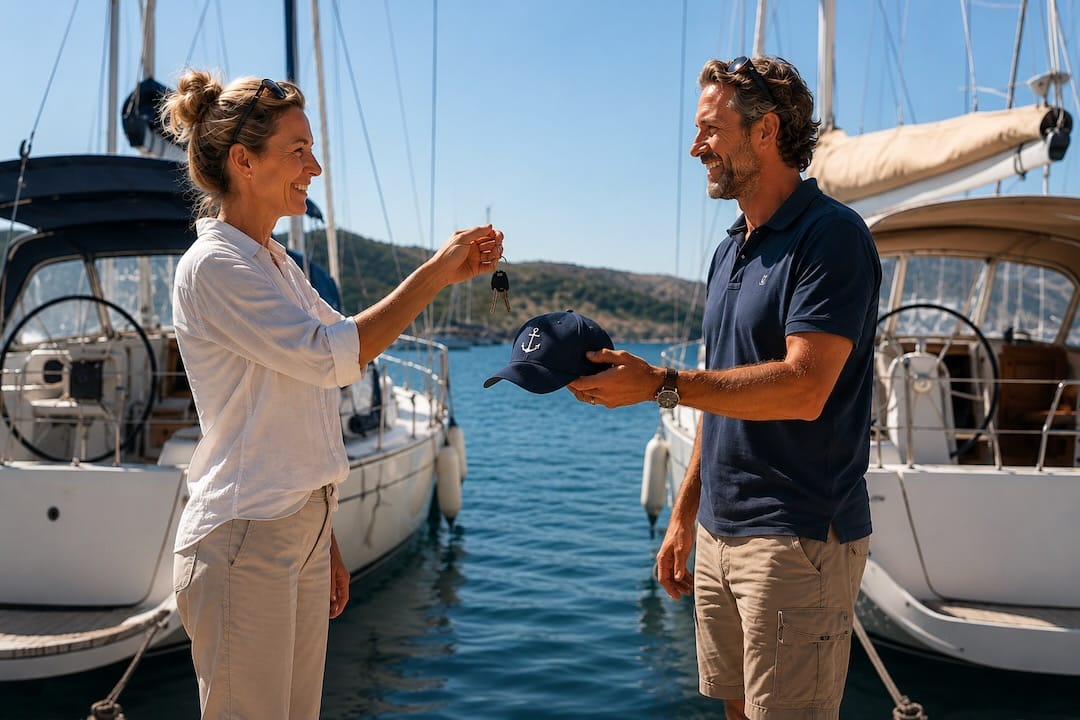
How Does Boat Swapping Work
“Okay, but exactly how does boat swapping work?”
Most people understand the basic concept. Two owners exchange boats instead of paying for expensive charters or relocating their own yacht halfway around the world.
But the practical details matter. And everyone pictures something a little different.
The idea behind DIY Boat Swap is to create your own version of a boat swap that works for you.
But no matter what the perfect scenario is for you you still need to know the basics. things like:
- How do you find a match?
- What information should you share?
- How do you know if the other boat is suitable?
- What happens once you’ve found somebody interested?
While every swap will be different, most successful boat swaps will probably follow a similar process.
Step 1: Create a Listing
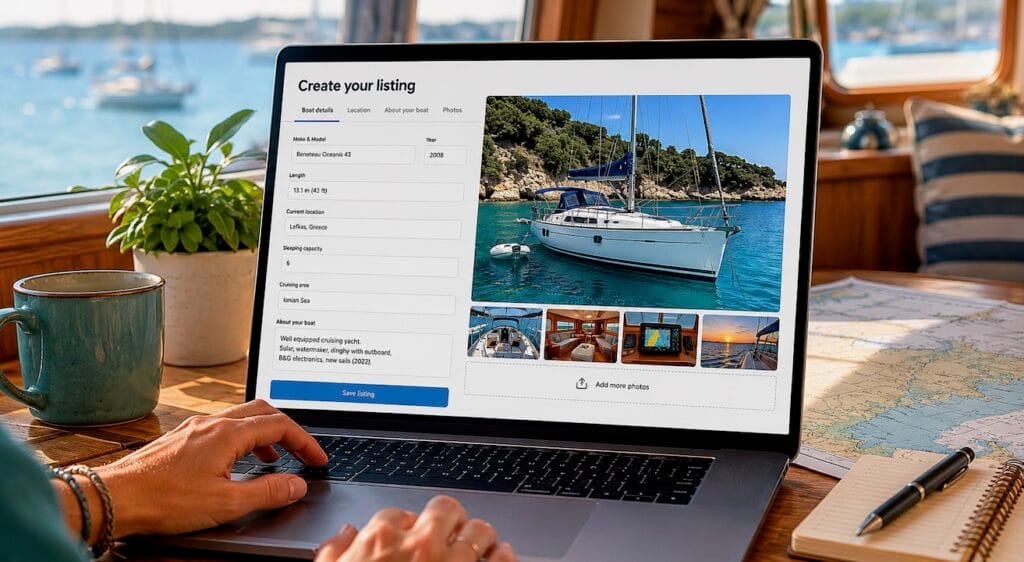
The first step is creating a detailed listing for your boat.
This isn’t just about uploading a few photos.
The more information you provide, the easier it becomes for potential swap partners to determine whether your boat is a good fit.
A good listing should include the basics make, model, year, location, accommodation, equipment, and plenty of photos — but also the details that matter to cruisers. Does the boat have solar? A watermaker? Offshore capability? Is it set up for life at anchor or marina hopping?
The goal isn’t to sell your boat.
It’s to help another sailor understand exactly what they’re getting.
Honesty is your friend here.
Nobody benefits from overselling a boat.
Did you know you don’ts need to have a boat to participate in a boat swap? If you have sailing experience then you might be able to find a boat owner willing to swap there boat for another assett. You can submit a listing with any asset class!
Step 2: Explain What You’re Looking For
A swap isn’t just about your boat.
It’s also about where you’d like to go.
Maybe you have a boat in Greece and dream of spending a season cruising the Caribbean.
Maybe you’re based in Florida and would love to explore Scotland.
Maybe you simply want to experience a different cruising ground without moving your own boat across an ocean.
The more specific you can be about your goals, the easier it becomes to find compatible opportunities.
Not Every Swap Looks the Same

When most people hear “boat swap,” they imagine two owners exchanging boats for the same period of time.
And sometimes that’s exactly what happens.
A sailor in Greece swaps with a sailor in the Caribbean. Both get to explore a new cruising ground without moving their own boat halfway around the world.
But one of the ideas behind DIY Boat Swap is that we’re not trying to dictate exactly how people should exchange value.
A swap might be a direct one-for-one exchange.
It might be a time-in-lieu arrangement where one owner hosts another and receives time aboard their boat later.
It could be a three-way swap where each owner gains access to a cruising ground they couldn’t otherwise reach.
Maybe it’s a boat-for-campervan exchange. A boat-for-house swap. Or even a hosted sailing experience where one owner introduces another to their local waters before becoming a guest aboard their vessel somewhere else in the world.
Some arrangements may happen simultaneously.
Others might happen months or even years apart.
The common thread isn’t necessarily that two boats change hands at exactly the same time.
It’s that both parties find value in the arrangement.
After all, every boat is different, every cruising ground is different, and every sailor is looking for something slightly different too.
Step 3: Browse Other Listings
Once your listing is live, you can browse other boats and cruising destinations.
This is often where people begin to see the real potential of the idea.
Instead of looking at charter fleets, you’re looking at real cruising boats owned by real sailors.
That means you may find offshore-capable cruisers, liveaboard setups, boats with solar and watermakers, unique destinations, and vessels equipped for the way sailors actually travel.
Some will be perfect for you.
Many won’t.
That’s completely normal.
The goal isn’t to find every boat.
It’s to find the right boat.
Step 4: Start the Conversation

When you find a boat that interests you, the next step is simply reaching out.
At this stage, you’re not committing to anything.
You’re starting a conversation.
Most swaps will involve discussing sailing experience, cruising plans, timing, boat systems, expectations, insurance, and local regulations.
This is often where both parties discover whether the swap is genuinely compatible.
Some conversations will end quickly.
Others may develop into something much more interesting.
Step 5: Get to Know Each Other
This is probably the most important step of all.
Boat swapping relies on trust.
Before exchanging boats, most owners will want to speak directly, ask questions, share sailing experience, discuss expectations, and understand each other’s cruising style.
The goal isn’t perfection.
It’s confidence.
Both parties should feel comfortable with the arrangement before moving forward.
A successful swap is usually built long before anybody steps aboard.
Step 6: Work Through the Practical Details

Once you’ve got anb agreement in principle, it’s time to discuss the practicalities.
- Insurance requirements.
- Cruising restrictions.
- Arrival and departure dates.
- Documentation.
- Marina arrangements.
- Local regulations.
Every boat and every cruising ground is different.
The important thing is making sure expectations are clear before anyone leaves the dock.
Insurance, practical arrangements, and expectations are often where the real work happens. We’ve put together a collection of templates, checklists, and planning tools to help owners think through the details before agreeing to a swap.
Step 7: Complete a Detailed Handover
A good handover can make or break a swap.
Even experienced sailors need time to understand a new boat.
Owners should explain the electrical system, anchoring setup, engine procedures, safety equipment, local knowledge, and any quirks that only become obvious after living aboard.
The more information shared upfront, the smoother the experience will usually be.
Step 8: Go Sailing
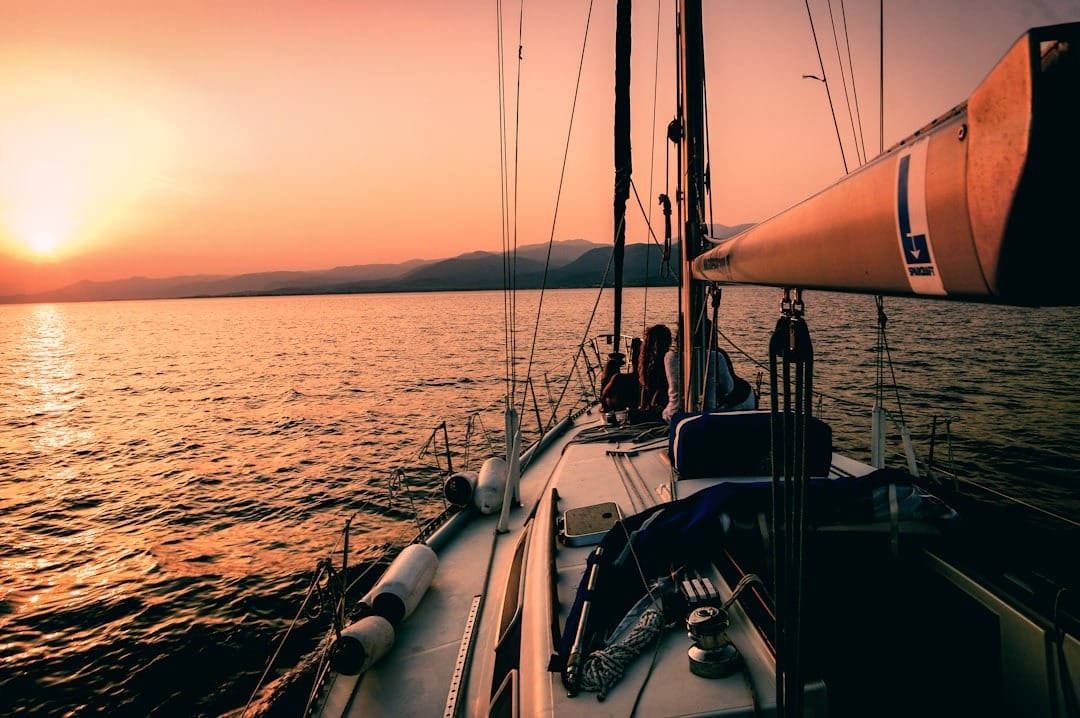
The fun part.
Instead of spending thousands on a charter or weeks relocating your own boat, you’re exploring a new cruising ground aboard a boat that’s already there.
For many sailors, this is the real appeal of boat swapping.
Not free sailing.
Not avoiding responsibility.
Simply gaining access to places, experiences, and cruising grounds that might otherwise be difficult, expensive, or time-consuming to reach.
Boat Swapping Isn’t for Everyone
Boat swapping requires trust, communication, flexibility, and a willingness to work through practical challenges.
It won’t suit every owner.
And not every potential swap will be a good fit.
But for sailors willing to invest the time in finding compatible people and compatible opportunities, it offers something genuinely different.
A way to access new cruising grounds, new boats, and new experiences without adding another boat to the world.
After all, there are already plenty of boats.
The challenge is helping them sail more.